Views: 0 Author: Site Editor Publish Time: 2026-07-17 Origin: Site


Table of Contents
The physical layer of any modern computing facility acts as either the definitive bottleneck or the ultimate enabler for high-density computing, AI workloads, and hyperscale environments. At the heart of this physical layer is the interconnect infrastructure, where cabling and physical connector assemblies dictate the absolute limits of system performance. Selecting the right data center connector requires moving beyond basic plug-and-play compatibility. It demands a rigorous evaluation of transmission speeds, power delivery capacities, modularity, and environmental resilience.
Poor connector selection introduces severe operational risks. Restricted bandwidth scaling chokes data throughput, while bulky cable assemblies obstruct airflow, leading to thermal inefficiencies and hardware throttling. Furthermore, substandard mechanical reliability increases latency and causes downtime due to physical failures. Infrastructure architects must evaluate connectors based on their ability to support current network demands while providing a clear migration path for future high-speed deployments.
· Application Dictates Medium: Copper remains viable for short-reach, cost-sensitive rack deployments, while fiber-optic connectors are mandatory for high-bandwidth, long-haul, and 400G/800G migrations.
· Density Requires Modularity: High-density server architectures increasingly rely on modular connectors to combine power, signal, and data in constrained footprints.
· Thermal Management is Critical: The rise of liquid cooling introduces specialized quick-disconnect (QD) connectors, shifting evaluation criteria from pure data transmission to fluid and thermal integrity.
· Standardization Reduces Lock-in: Adhering to Multi-Source Agreement (MSA) and IEEE standards ensures interoperability and mitigates supply chain risks.
Network speeds are accelerating rapidly, moving from 10G and 40G environments to 400G and 800G architectures. Mapping connector capabilities to these current and future network speeds is non-negotiable. Connectors must support the required data rates without introducing unacceptable signal degradation. Signal integrity becomes paramount at higher frequencies, where even minor physical imperfections in the mating interface can cause severe data packet loss.
Insertion loss and return loss tolerances must be strictly managed for mission-critical applications. High-performance computing clusters require low-latency connections, meaning the physical interconnects must minimize signal reflection and attenuation. Engineers must specify components that exceed the minimum baseline requirements of the active equipment to ensure a stable transmission channel under heavy load. For example, when deploying 400GBASE-DR4, the optical loss budget is extremely tight. Every connector in the channel consumes a portion of that budget. Using low-grade connectors with high insertion loss risks failing the link entirely. We always recommend specifying low-loss connectors to maintain adequate headroom.
The choice of cabling architecture directly impacts the deployment and selection of interface types. Top-of-Rack (ToR) topologies typically utilize shorter cable runs, making direct attach copper or short-reach optical transceivers highly effective. This approach minimizes the sheer volume of cabling exiting the rack, simplifying management and reducing physical strain on the ports.
Conversely, End-of-Row (EoR) and Middle-of-Row (MoR) architectures require longer cable runs to connect servers to centralized aggregation switches. These topologies heavily favor structured fiber optic cabling and high-density patch panels. The physical connectors used in these scenarios must support rapid patching, high mating cycles, and easy identification to facilitate maintenance across extensive cable trays.
Topology | Typical Cable Run | Preferred Connector / Media | Primary Advantage |
|---|---|---|---|
Top-of-Rack (ToR) | 1 to 5 meters | DAC / Twinax, RJ45 | Low latency, minimal cable bulk exiting the rack |
Middle-of-Row (MoR) | 5 to 15 meters | AOC, LC Fiber | Centralized switch management, balanced cable lengths |
End-of-Row (EoR) | 15 to 30+ meters | MPO/MTP, High-Density LC | Maximum switch port utilization, scalable backbone |
Port density directly dictates switch and server design. As facilities pack more compute power into standard 19-inch racks, the physical space available for I/O interfaces shrinks. Equipment manufacturers are forced to utilize smaller form factor connectors to maximize the number of ports on a single faceplate. This drive for density requires careful evaluation of the physical dimensions of the connector housing and the associated cable strain relief.
There is a constant trade-off between connector size and the physical limits of the rack infrastructure. Ultra-dense patch panels can accommodate hundreds of fiber strands, but they require specialized tools and extreme precision during installation and maintenance. Selecting the data center connector involves balancing maximum port density with the practical reality of technicians needing physical access to plug and unplug cables without disrupting adjacent links. We often see facilities deploy ultra-high-density panels only to realize technicians cannot physically reach the center ports without a specialized extraction tool.
Physical cabling bulk significantly affects HVAC efficiency and rack airflow. Thick bundles of legacy copper cables can create physical dams within the rack, trapping exhaust heat and forcing server fans to work harder. This increases overall power consumption and reduces the lifespan of active components. Transitioning to thinner, higher-capacity interconnects improves airflow pathways and enhances cooling efficiency.
Power delivery requirements for high-performance computing clusters also influence connector selection. High-amperage power connectors must be routed carefully to avoid electromagnetic interference with adjacent data lines. The physical design of these power interfaces must ensure secure, low-resistance connections to minimize heat generation at the mating point, which is critical for maintaining thermal stability in dense server deployments.
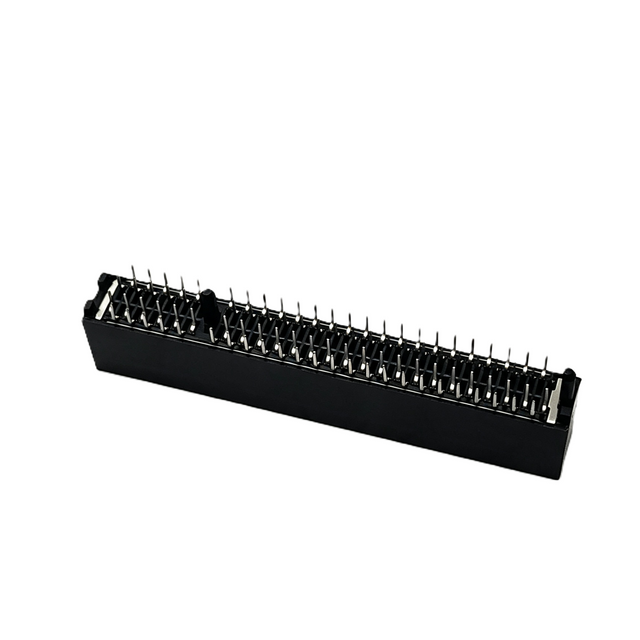
Fiber optics dominate high-bandwidth, long-distance transmission. LC connectors maintain dominance in singlemode applications and high-density patching environments due to their small form factor and reliable latching mechanism. They are the standard interface for most SFP and QSFP optical transceivers, providing a secure connection for duplex fiber links.
MPO and MTP connectors are essential for multi-fiber arrays, supporting parallel optics required for 40G, 100G, and higher Ethernet standards. A single MPO connector can house 12, 24, or even 32 fibers, drastically reducing the physical footprint required for high-capacity backbone links. However, they require strict adherence to polarity rules and meticulous cleaning protocols to ensure proper operation.
The decision between singlemode and multimode fiber depends on distance and physical footprint. Hyperscalers increasingly utilize Wavelength Division Multiplexing (WDM) on singlemode fiber with specialized connectors. This approach allows multiple data streams to travel over a single fiber pair, drastically reducing cabling bulk and simplifying the physical infrastructure while supporting massive bandwidth scaling.
Traditional twisted-pair Ethernet utilizing RJ45 connectors remains prevalent for management networks and legacy server connections. However, its realistic lifespan in high-performance environments is limited. Cat6 and Cat6a support 10GBASE-T up to 100 meters, while Cat8 supports 25G and 40G but is strictly limited to 30-meter channels. The physical bulk and power consumption of high-speed Base-T equipment make it less desirable for dense deployments.
Direct Attach Copper (DAC) and Twinax cables offer significant advantages for Top-of-Rack and short-reach server-to-switch connections. They provide zero-power consumption at the connector interface and extremely low latency. DAC assemblies feature transceivers permanently attached to the copper cable, eliminating the need for separate optical modules and providing a highly reliable, plug-and-play solution for intra-rack connectivity.
Direct power supply integration requires robust busbar connectors and blind-mate power interfaces. These components are engineered to handle high amperage while allowing servers and power supply units to be swapped without manual cable disconnection. The blind-mate design ensures perfect alignment during insertion, reducing the risk of arcing or physical damage to the contacts.
Safety standards, amperage ratings, and thermal dissipation performance are critical for power distribution units and power-shelf applications. Connectors must maintain low contact resistance to prevent localized heating under heavy electrical loads. High-reliability power interfaces are fundamental to maintaining uptime, as any failure in the power delivery chain immediately impacts compute availability.
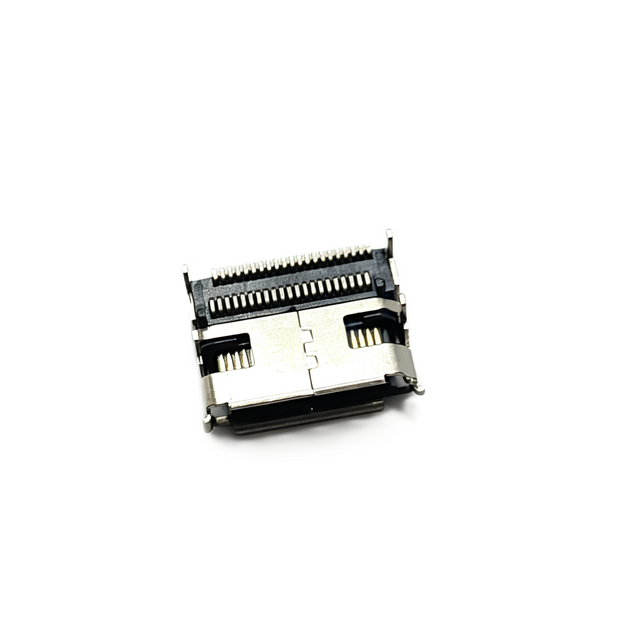
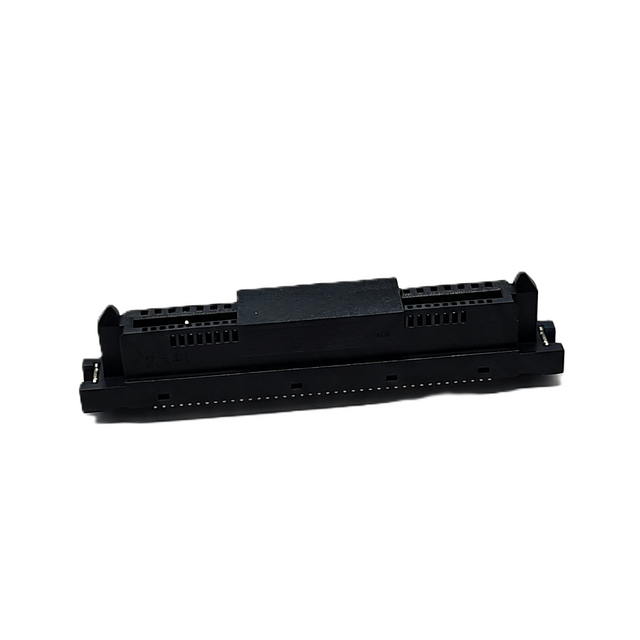
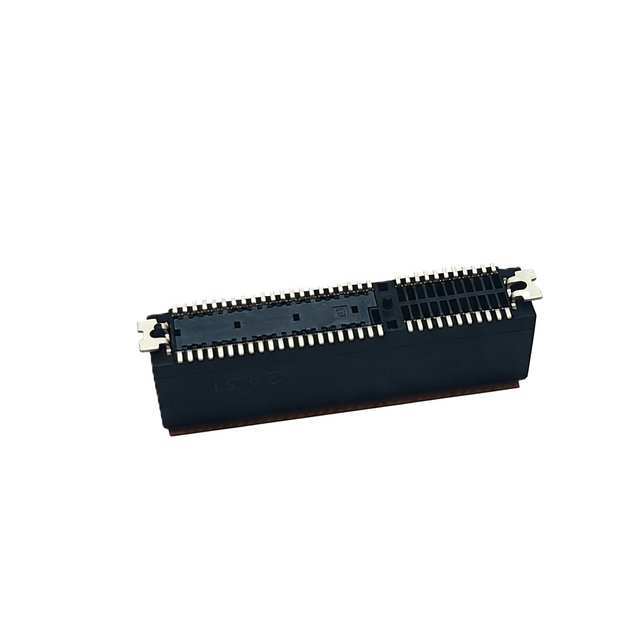
Customizable modules that integrate power, signal, and data into a single physical housing provide a distinct engineering advantage. These modular connectors streamline server assembly, reduce internal cable clutter, and improve airflow within the chassis. By consolidating multiple interfaces into one block, hardware designers can optimize the internal layout of dense compute nodes.
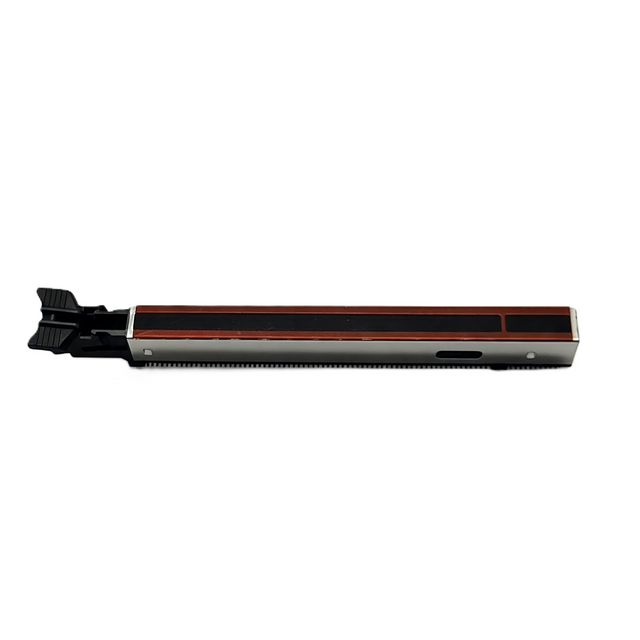
High-speed board-to-board, backplane, and mezzanine connectors allow design engineers to dynamically scale server hardware. Interfaces such as OCP NIC 3.0 utilize advanced mezzanine connectors to provide modular network connectivity directly to the motherboard. These connectors must support extreme data rates while maintaining strict signal integrity across the printed circuit board transition.
The shift toward direct-to-chip and immersion cooling introduces entirely new physical interface requirements. Liquid cooling systems rely on Quick Disconnect (QD) connectors to route coolant directly to the heat-generating components. These connectors must provide leak-free performance under pressure, ensuring that dielectric or water-based coolants never compromise the electronic hardware.
Evaluating QD connectors involves assessing thermal efficiency, flow rates, and maintenance safety. The connectors must feature dry-break technology, which prevents fluid spillage during disconnection. This allows technicians to hot-swap servers or perform routine maintenance without draining the entire cooling loop, maintaining operational continuity in high-density environments.
Comparing the power consumption of different interconnect technologies is crucial for optimizing facility efficiency. Direct Attach Copper assemblies draw virtually no power, making them highly efficient for short runs. Active Optical Cables (AOC) and traditional optical transceivers require electrical power to drive the lasers and signal processing components. Over thousands of ports, this power draw significantly impacts the facility's overall energy footprint and cooling requirements.
Evaluating performance requires analyzing the energy consumed per bit of data transmitted. High-efficiency transceivers and optimized connector interfaces reduce the thermal load on the rack equipment. Facilities must balance the need for high-speed optical reach with the energy savings provided by passive copper connections where distance permits.
A chosen connector standard must support the facility's next-generation upgrade path without requiring a complete rip-and-replace of the structured cabling. Deploying MPO-based fiber trunks allows facilities to upgrade from 40G to 100G or 400G simply by swapping the edge transceivers and patch cords, leaving the backbone infrastructure intact.
Evaluating scalability involves looking at the roadmap of the specific connector form factor. Selecting interfaces that are actively developed and supported by major hardware vendors ensures long-term viability. The physical infrastructure should be designed with enough headroom to accommodate at least two generations of active equipment upgrades.
Compliance with IEEE, TIA/EIA, and MSA standards is fundamental to building a reliable network. These standards dictate the exact physical dimensions, electrical characteristics, and optical performance of the connectors. Compliance guarantees that components from different manufacturers will mate correctly and perform to the specified baseline.
Standardized form factors, such as SFP, QSFP, and OSFP, protect against vendor lock-in. By utilizing MSA-compliant interfaces, facilities can source transceivers and cables from multiple suppliers, ensuring supply chain resilience. Proprietary connectors restrict hardware choices and complicate future network expansions.
Routine maintenance and hardware upgrades involve repeatedly plugging and unplugging cables. This introduces the risk of connector wear-and-tear, where the physical contacts degrade, leading to increased insertion loss or intermittent signal failures. Optical connectors are particularly susceptible to scratches and contamination on the fiber end-face during mating cycles.
To mitigate this risk, specify connectors with high durability ratings designed for enterprise environments. Implement strict handling protocols:
Mandate inspection of all fiber optic end-faces with a digital scope before every connection.
Utilize click-style mechanical cleaners for both patch cords and bulkhead ports.
Keep dust caps installed on all unused transceivers and cable ends at all times.
Log mating cycles for critical backbone links to replace assemblies before they reach their mechanical limit.
The accumulation of unmanaged cables creates severe blockages, which restrict airflow through the server racks. This obstruction causes thermal hotspots, forcing cooling systems to work harder and increasing the risk of equipment failure due to overheating. Poor cable management also makes tracing faults and replacing hardware incredibly difficult and time-consuming.
Mitigate this by utilizing comprehensive structured cabling systems and high-density patch panels. Route cables strictly through designated vertical and horizontal managers. Transitioning from bulky copper to thinner fiber optic cables or utilizing uniboot LC connectors significantly reduces the physical volume of the cabling, opening up airflow pathways.
Mixing proprietary components with generic hardware often causes network faults, link flapping, or complete connection failures. Even if a connector physically fits into a port, firmware incompatibilities or slight deviations from MSA standards can prevent the active equipment from establishing a stable link.
Mandate rigorous pre-deployment testing for all new cable assemblies and transceivers. Ensure strict adherence to MSA-compliant hardware across the entire infrastructure. Maintain a standardized approved vendor list for all physical layer components to guarantee interoperability between switches, servers, and the structured cabling plant.
Building a high-performance data center requires selecting the right combination of connectors for networking, power delivery, storage, and cooling. By evaluating bandwidth requirements, connector compatibility, thermal performance, scalability, and long-term reliability, organizations can improve infrastructure efficiency, reduce downtime, and support future generations of high-speed computing and AI applications.
Working with an experienced connectivity solutions provider is equally important for ensuring dependable performance and long-term system reliability. CONSHAREA provides a comprehensive portfolio of high-performance data center connectors designed for modern IT infrastructure. With advanced engineering, strict quality control, and professional technical support, we help customers optimize connectivity, improve signal integrity, enhance power efficiency, and build scalable, future-ready data center solutions.
Audit your existing rack layouts to map out physical space limitations and current port densities.
Calculate projected bandwidth requirements for the next 36 months to determine necessary fiber backbone upgrades.
Inspect current cable routing to identify and eliminate thermal blockages obstructing rack airflow.
Consult with certified structured cabling vendors to design a standardized, MSA-compliant physical layer.
Request evaluation samples of high-density and modular connectors to perform mechanical and signal integrity testing on-site.
A: The LC connector is the most common for fiber-optic connections due to its small form factor and reliability. For copper Ethernet, the RJ45 remains ubiquitous for management connections, while DAC assemblies using SFP or QSFP interfaces dominate high-speed, short-reach switch-to-server links.
A: Facilities should transition to fiber when bandwidth requirements exceed 10G over distances greater than 100 meters, or when deploying 25G and 40G speeds beyond the 30-meter limit of Cat8 copper. Fiber is also necessary when rack density requires reducing cable bulk to improve airflow.
A: LC connectors terminate one or two fiber strands and are used for duplex transmission. MPO connectors terminate multiple fibers, typically 12 or 24, in a single housing. This enables parallel optics for 40G and 100G links, drastically increasing port density on patch panels.
A: Modular connectors combine power, data, and signal pins into a single customizable housing. This reduces internal cable clutter, simplifies server assembly, improves internal airflow, and allows hardware engineers to design more compact, dense compute nodes.
A: Liquid cooling relies on Quick Disconnect (QD) connectors to route coolant to hardware. These connectors must provide leak-free, dry-break performance, allowing technicians to safely connect and disconnect fluid lines during maintenance without spilling coolant on electronic components.
A: A DAC is a twinax copper cable with factory-terminated transceiver housings on each end. It is used primarily for Top-of-Rack deployments to connect servers directly to the adjacent switch, offering low latency and near-zero power consumption at the interface.