
 |


| Quantity: | |
|---|---|
Card Edge Connector
Industrial, IT Datacom
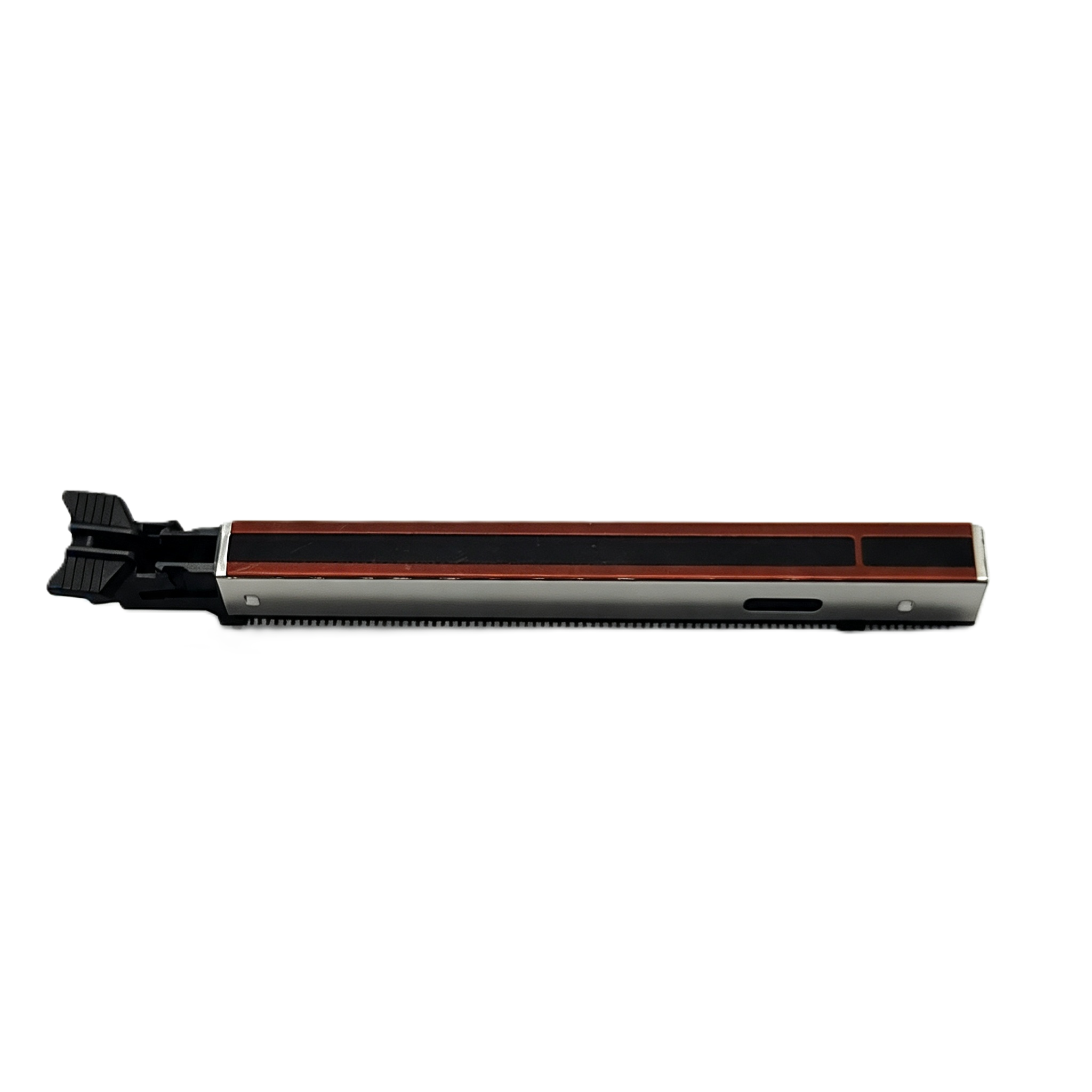
The PCIe 5.0 SMT connector with eject latch represents a critical interface component for next-generation computing platforms. As data rates push toward 32 GT/s, the connector system must deliver not only electrical performance but also mechanical robustness and manufacturing compatibility. This 164-position, x16 link width connector is engineered specifically for surface-mount assembly on PCBs, featuring a vertical orientation and a 1.00mm pitch that aligns with PCI-SIG CEM 5.0 specifications.
CONSHARE has developed this connector to address the real-world challenges that design engineers and procurement professionals face when selecting high-speed interconnect solutions for servers, workstations, AI accelerators, and data center infrastructure.

The transition from PCIe 4.0 to 5.0 doubles the data rate to 32 GT/s, placing unprecedented demands on the connector's electrical characteristics. This connector maintains controlled impedance of 85Ω differential, a requirement that becomes non-negotiable at Gen 5 speeds. The 1.00mm contact pitch provides sufficient spacing to minimize crosstalk while preserving the density required for x16 lane configurations.
What this means for your design: signal integrity margins that previously seemed adequate may prove insufficient at 32 GT/s. This connector's electrical architecture is validated to support full Gen 5 signaling, reducing the risk of costly redesigns or signal integrity failures during system validation. It maintains backward compatibility with PCIe Gen 4, Gen 3, Gen 2, and Gen 1 interfaces, allowing you to standardize on a single connector family across multiple product generations.
The SMT termination style is chosen deliberately for modern PCB assembly processes. With a recommended reflow soldering profile of 260°C for 3 to 5 seconds, this connector is compatible with standard lead-free soldering processes. The recommended stencil thickness of 0.15mm (approximately 6 mils) falls within the optimal range for fine-pitch SMT components, ensuring adequate solder paste volume without risking bridging between adjacent pads.
Consider the manufacturing implications: inconsistent solder joints on a 164-pin connector can lead to intermittent failures that are difficult to diagnose in the field. The connector's design includes solder retention features that help maintain proper alignment during reflow, reducing tombstoning and misalignment risks. For high-volume production environments, this translates to higher first-pass yields and lower rework costs.
The connector is supplied in tray packaging, which provides robust protection during shipping and is compatible with pick-and-place equipment for automated assembly.
One of the most frequently overlooked aspects of connector selection is the mechanical user experience. This connector features an integrated eject latch that serves two critical functions:
Secure Retention: The latch provides positive locking engagement with the add-in card, preventing accidental disconnection due to vibration or thermal cycling—a particular concern in server environments where fans generate continuous vibration.
Controlled Extraction: The eject mechanism allows for smooth, controlled removal of the add-in card without exerting excessive force on the PCB or the connector housing. This is especially important when cards are inserted and removed multiple times during system assembly, testing, or field upgrades.
The connector is rated for 50 mating cycles minimum. While this may seem modest compared to some industrial connectors, it is the PCIe CEM specification requirement and is appropriate for the intended application—desktop PCs, servers, and workstations where add-in cards are not frequently swapped. For applications requiring higher cycle counts, CONSHARE offers variants with 30μ" gold plating that support extended durability.
The insertion force is specified at 1.15N maximum per contact pair, while the withdrawal force is 0.15N minimum per contact pair. This force profile is carefully balanced: the insertion force is low enough to prevent PCB flexing during card installation, while the withdrawal force is high enough to ensure reliable contact under vibration.
Contact plating is one of the most consequential decisions in connector selection. This connector features 15μ" (0.38μm) gold plating on the contact area.
Why does this matter? Gold plating serves two purposes: corrosion protection and low contact resistance. In data center environments, airborne contaminants (sulfur, chlorine compounds) can oxidize base metals, leading to contact resistance degradation over time. The 15μ" gold thickness provides a robust barrier against corrosion while remaining cost-effective compared to 30μ" options.
The initial contact resistance is specified at ≤30 milliohms, with a post-test limit of ≤50 milliohms. This ensures that the connector maintains low and stable contact resistance throughout its service life, preventing signal attenuation and heat generation at the contact interface. The insulation resistance of ≥1000 megohms and dielectric withstanding voltage of ≥500V AC provide additional safety margins for system reliability.
For most server and computing applications, 15μ" gold offers the optimal balance between cost and reliability. Applications with extreme environmental conditions or very high cycle counts may benefit from 30μ" gold plating, which CONSHARE also offers.
The connector is rated for operation from -40°C to +105°C. This wide temperature range is not just a specification—it reflects real-world operating conditions.
Consider a typical server deployment: ambient temperatures in data centers are controlled, but localized heating near high-power GPUs or CPUs can elevate temperatures significantly. The 105°C upper limit provides a safety buffer for these hot spots. At the lower end, -40°C ensures functionality during cold starts in unheated facilities or during transportation through cold climates.
The housing material is selected for thermal stability, maintaining dimensional integrity through repeated thermal cycles. This prevents warping or deformation that could compromise contact alignment over time.
The connector is designed for a standard PCB thickness of 1.57mm (0.062"), which is the industry-standard card thickness for PCIe add-in cards. The vertical SMT mounting configuration occupies minimal board real estate while providing the mechanical stability required for heavy add-in cards.

For optimal solder joint quality, CONSHARE recommends:
Stencil thickness: 0.15mm
Reflow peak temperature: 260°C
Time above liquidus: 3-5 seconds
These parameters are consistent with standard JEDEC recommendations for lead-free assembly. The connector's terminal design supports reliable solder wetting, reducing the risk of voiding or insufficient fillet formation.
The eject latch mechanism requires adequate clearance on the PCB for full actuation. Design engineers should account for the latch's travel path when placing adjacent components. The connector's overall dimensions and latch profile are detailed in the mechanical drawing, ensuring straightforward integration into your PCB layout.
This connector conforms to PCI-SIG CEM 5.0 specifications, ensuring interoperability with PCIe 5.0-compliant add-in cards and motherboards.
CONSHARE works closely with customers to understand their specific requirements, offering customization options including plating thickness (15μ" or 30μ"), housing color (black is standard), and packaging configurations.
Each connector undergoes rigorous testing for contact resistance, insulation resistance, and dielectric withstanding voltage to ensure consistent quality across production volumes.
With tray packaging and standard lead times, CONSHARE ensures that your production schedules are not disrupted by component shortages.
Application Area | Key Considerations | Why This Connector Fits |
|---|---|---|
Servers & Data Centers | High reliability, thermal cycling, vibration | 105°C rating, secure eject latch, 50-cycle durability |
AI Accelerators & GPUs | High power, signal integrity at 32 GT/s | 1.1A per pin rating, 85Ω impedance control |
Workstations & Desktop PCs | Ease of assembly, user experience | Smooth eject latch operation, SMT process compatibility |
Network Edge & Embedded Systems | Space constraints, varied environments | Compact SMT footprint, wide temperature range |
Test & Measurement Equipment | Frequent card swaps, precision requirements | Controlled insertion/withdrawal forces, consistent contact resistance |
A: Yes. The connector is fully backward compatible with PCIe Gen 4, Gen 3, Gen 2, and Gen 1 interfaces in both mechanical footprint and electrical signaling. While the connector supports 32 GT/s signaling, it will operate reliably at lower data rates.
A: The plating thickness affects both durability and cost. 15μ" gold is suitable for standard applications with up to 50 mating cycles. 30μ" gold provides extended wear resistance for applications requiring higher cycle counts or more aggressive environmental conditions. CONSHARE offers both options.
A: Yes. The connector is supplied in tray packaging and is designed for standard pick-and-place assembly. The recommended reflow profile (260°C, 3-5 seconds) is compatible with lead-free soldering processes.
A: The connector is designed for a PCB thickness of 1.57mm (0.062"), which is the standard PCIe card thickness. Boards within the accepted tolerance range will also function correctly.
A: The integrated eject latch provides positive locking engagement with the add-in card. To remove the card, the user actuates the latch, which releases the locking mechanism and assists in extracting the card from the connector. This reduces the force required for removal and prevents damage to the connector or PCB.
A: The connector is rated for 1.1A per power pin. Signal pins have a lower current rating of 0.7A. These ratings ensure safe operation under normal load conditions with adequate margin.
Parameter | Value |
|---|---|
Interface Standard | PCIe CEM 5.0 |
Number of Positions | 164 (x16 link width) |
Pitch | 1.00mm |
Mounting Type | SMT, Vertical |
Termination | Solder |
Contact Plating | Gold, 15μ" (0.38μm) |
Current Rating | 1.1A per power pin |
Contact Resistance (Initial) | ≤30mΩ |
Insulation Resistance | ≥1000MΩ |
Dielectric Withstanding Voltage | ≥500V AC |
Insertion Force | ≤1.15N per contact pair |
Withdrawal Force | ≥0.15N per contact pair |
Durability | 50 cycles minimum |
Operating Temperature | -40°C to +105°C |
Housing Color | Black |
Packaging | Tray |
For detailed mechanical dimensions, PCB footprint recommendations, and additional technical specifications, please refer to the product drawing or contact CONSHARE's engineering support team.


